
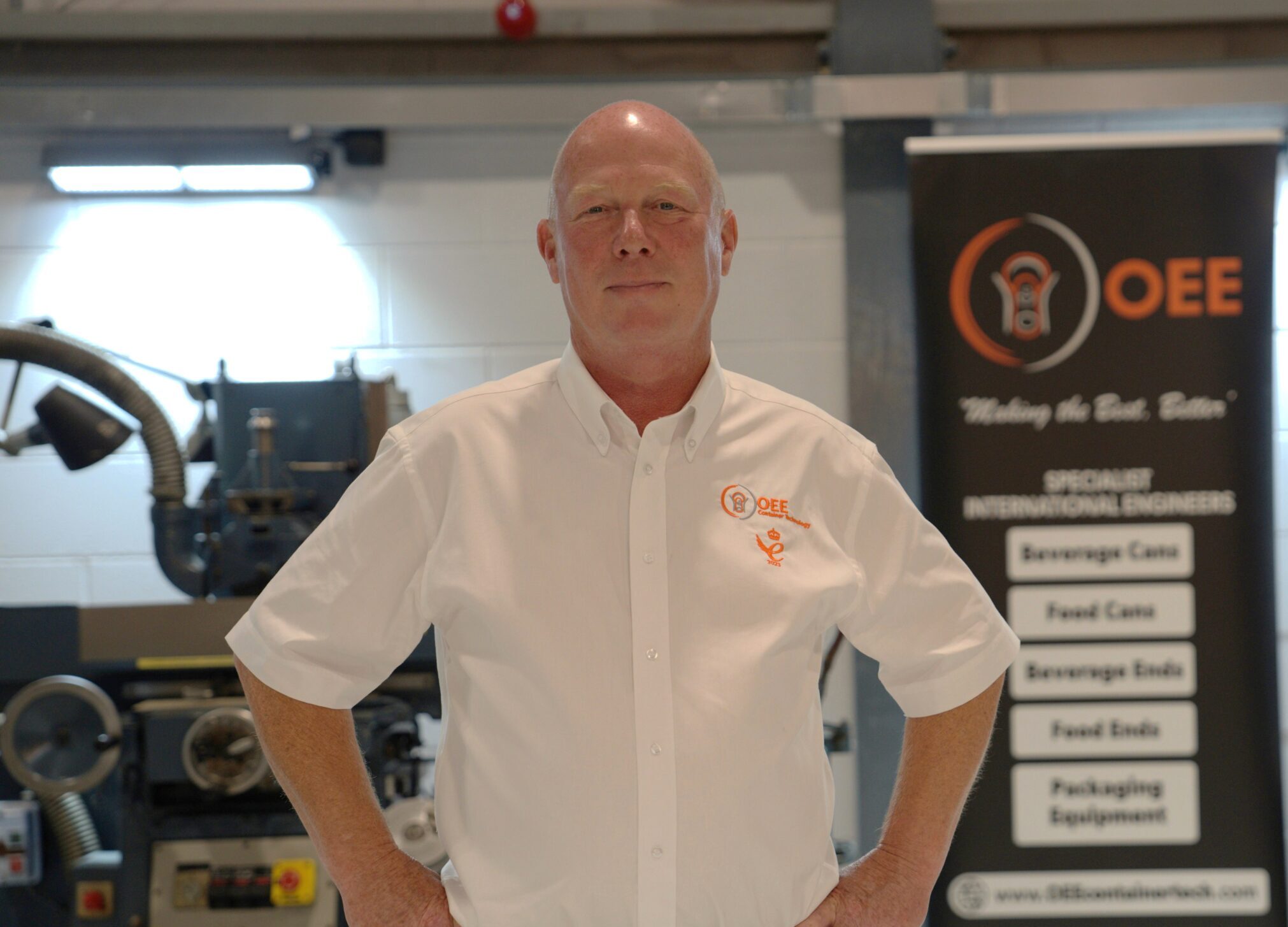
As an industry, we have to be honest with ourselves: we’re antiquated. We’ve talked for years about modernisation, about digital tools, process monitoring and the use of AI, and yet the reality is that most of us still do things the same way we’ve always done them. We are comfortable with what works, even when we know deep down that ‘what works’ could work a lot better, writes Bruce Jones, Managing Director, OEE Container Technology.
But adoption requires more than hardware—it requires the right mindset and training. In many cases, we’re lacking both. I’ve been in major plants where live monitoring systems—tools specifically designed to give operators real-time insight—are not clear. That tells you everything you need to know about where we stand.
Part of the problem is structural. Canmaking has a notoriously high barrier to entry. Equipment costs are massive, and rightly so, otherwise it’s a race to the bottom. But that same cost sensitivity often stops operators from demanding the technologies that would improve quality and efficiency. Too often, a buyer looks at two quotes—one for a ‘standard’ line, and one with advanced monitoring, automation, and data integration—and chooses the lower number without truly comparing the value. Unless you have people who deeply understand the process, you won’t ask the right questions. And that lack of skill is the second major problem we face.
The skills gap in our sector is real. But it’s not only in our industry, it’s across multiple engineering industries. Is the generation coming through driven by the same factors we once were 20 or 30 years ago? When I started out, we were highly skilled before we went near a machine. Today’s generation do not always have that meaningful hands-on experience in advance.
Different parts of the world approach things differently. But there is, in some cases, a move back to more detailed training. At OEE Container Technology, we’re doing a lot of training, upskilling people to really understand the engineering and the technology behind the products. How we should manufacture, how that relates to the quality of data. It’s all about attitude and skill. We’ve neglected skills development for far too long. The result is a generation of engineers who can run the line, but don’t fully understand it.
We also hear a lot of noise about the adoption of AI into the canmaking process. Don’t get me wrong, I believe AI has a role to play. It can make processes smarter, faster, and more efficient. But are you really going to let a tool like that simple tell you how to run a canmaking plant? The reality is that AI only works when skilled people are there to interpret, question, and apply it. There has to be a measured implementation.
Collaborate and seek global talent. There are innovative companies driving change in every corner of the world, people from diverse backgrounds offering quality skills and fresh perspectives. Too often we stick with what is familiar because it feels safe, real progress happens when we look beyond the norms. We opened an office in the UAE to build on those global connections, tapping into that collective knowledge and sharing best practice will assist to drive this industry forward.
So, there is, without doubt, a move to the new generation. And with that will come change. The challenge now is to not just recognise it, but to embrace it and integrate it into how we operate. The tools are out there, the knowledge is out there. Its time we were using both.
Read the full article here: https://canmaker.com/